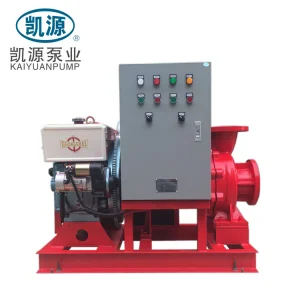
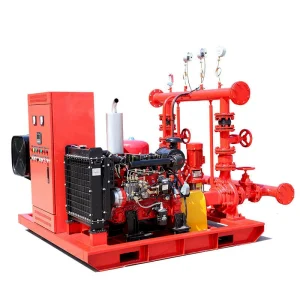
Basic Information
| Model NO. | ASN |
| Max.Head | >150m |
| Max.Capacity | >400 L/min |
| Driving Type | Motor / Diesel |
| Material | Stainless Steel / Cast Iron |
| Structure | Single-stage Pump |
| Power | Electric |
| Type | Fire Fighting Pump |
| Application | Fire Protection System |
| Theory | Centrifugal Pump |
| Flange Standard | ASME, DIN, GB |
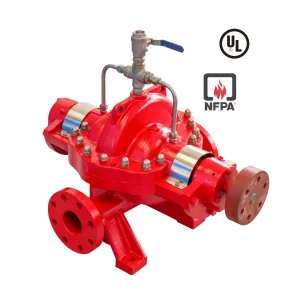
| UL Listed | Yes |
| Certificate | ISO, UL, CE |
| Transport Package | Wooden Case |
Product Description
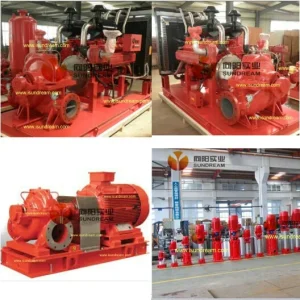
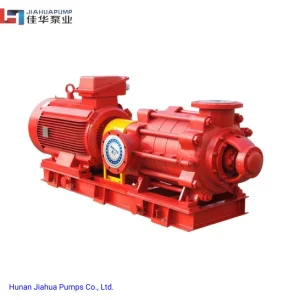
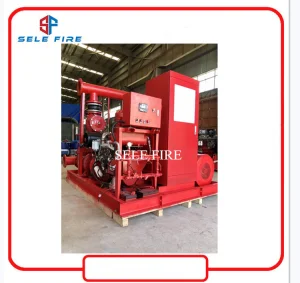
Precision balancing of all factors in the design of the ASN horizontal split case fire pump provides mechanical dependability, efficient operation, and minimal maintenance. Simplicity of design ensures long unit life, reduced maintenance costs, and minimum power consumption.
Pumping Solutions Capabilities:
- Complete in-house fabrication capabilities.
- Mechanical-run test capabilities for all NFPA standards.
- Horizontal models for capacities up to 2,500 GPM.
- Vertical models for capacities up to 5,000 GPM.
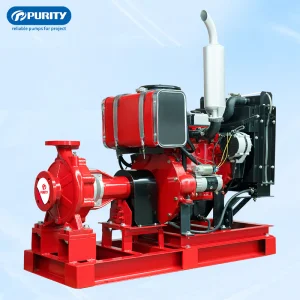
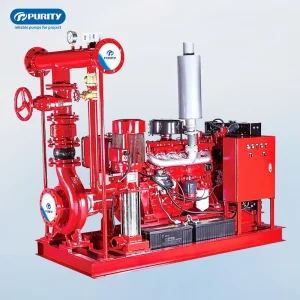
- Drives: Electric motor or Diesel engine.
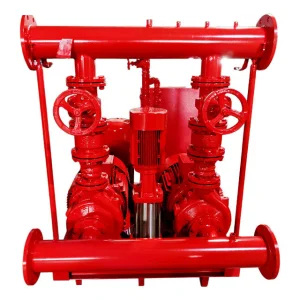
- Integrated basic units and packaged systems.
Engineered Systems & Application
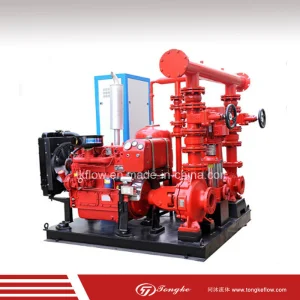
Packaged fire pump installations deliver superior fire protection to facilities worldwide. Systems are designed from a broad selection of pumps, drives, controls, base plates, and accessories.
- Standard fire pumps: Ductile cast iron with bronze fittings.
- Applicable for office buildings, hospitals, airports, and power stations.
- Ready-to-install units mounted on a common base.
Technical Parameters
| Feature |
Specifications |
| Capacity | 300 to 2500 GPM (68 to 567 M³/HR) |
| Head | 90 to 650 FEET (26 to 198 Meters) |
| Pressure | Up to 650 PSI (45 kg/cm²) |
| Horse Power | Up to 800 HP (597 kW) |
| Drivers | Horizontal Electric Motors, Diesel Engines |
| Liquid Type | Fresh Water or Sea Water |
| Material | Cast Iron, Stainless Steel, Ni-Al Bronze, Duplex SS |
UL Listed Data Selection
| Pump Model |
Rated Capacity (GPM) |
Inlet × Outlet (INCH) |
Pressure Range (PSI) |
Max Pressure (PSI) |
| 80-350 | 300 | 5×3 | 129-221 | 290 |
| 80-350 | 400 | 5×3 | 127-219 | 290 |
| 100-400 | 500 | 6×4 | 225-288 | 350 |
| 100-320 | 750 | 6×4 | 111-197 | 230 |
| 125-480 | 1000 | 8×5 | 64-84 | 200 |
| 150-570 | 1250 | 8×6 | 121-149 | 290 |
| 250-610 | 2500 | 14×10 | 92-148 | 290 |
Multistage Jockey Pump
A jockey pump is designed to maintain pressure in a fire protection piping system to an artificially high level. The operation of a single fire sprinkler will cause a pressure drop sensed by the automatic controller, prompting the main fire pump to start.
| Outlet Diameter | 25-150 mm |
| Pressure | 0.3-2.5 MPa |
| Seal | Mechanical Seal |
Manufacturing & Quality
⚙Excellent Manufacturing
Equipped with modern production bases and 5 efficient production lines, covering full range of fluid equipment products. We strive for perfection in every aspect of production and offer comprehensive testing services.
🛡Quality Assurance
Certified with ISO 9001:2015, ISO 14001, and ISO 45001. We ensure product stability and reliability through stringent international quality management systems.
Frequently Asked Questions
Q: What makes a fire pump different from other kinds of pumps?
A: Fire pumps meet stringent NFPA 20, UL, and FM requirements for extreme reliability. They must maintain specific pressure levels (at least 65% pressure at 150% rated flow) even under difficult conditions like a 15-foot lift.
Q: What is the typical lead time for a fire pump?
A: Typical lead times run 5-8 weeks from the release of an order, depending on the specific model and customization requirements.
Q: How are engines and motors sized for fire pumps?
A: Motors and engines are sized according to UL/NFPA 20 standards to operate at any point on the pump curve without exceeding the service factor. They are often sized for a 1.15 service factor since they don't run continuously.
Q: What is the easiest way of determining pump rotation?
A: Standing at the motor facing the pump, it is right-hand (clockwise) if suction is from the right and discharge is to the left. Rotation depends strictly on the vantage point.
Q: Do I need to worry about NPSH in fire pump applications?
A: Rarely. Fire pumps typically require a "flooded suction" where water arrives via gravity to ensure a 100% prime at all times, which is critical for fire emergency readiness.
Q: Can a flow meter loop substitute a test header?
A: While it tests hydraulic performance, a closed loop doesn't test the actual water supply integrity. For initial start-ups, flowing water through hoses and Playpipes is recommended to ensure the system is free of obstructions.


 Anj
Anj