Anj Anj

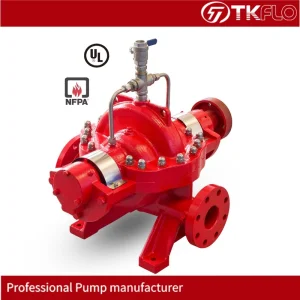
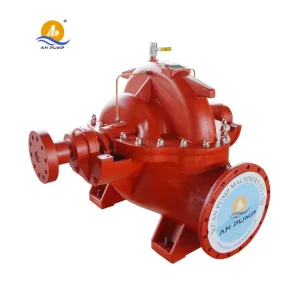
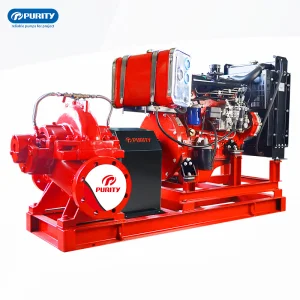
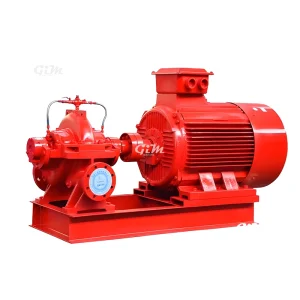
Vapor Corrosion Resisting Double Suction Split Case Fire Fighting Pump

Customization: Available
After-sales Service: Free Technical Support
Warranty: 1 Year

Product Description

Basic Information
Model NO.
ASN
Max.Head
>150m
Max.Capacity
>400 L/min
Driving Type
Motor / Diesel
Structure
Single-stage Pump
Power
Electric / Diesel
Type
Fire Fighting Pump
Theory
Centrifugal Pump
UL Listed
Yes
Certificate
ISO UL CE
Product Overview
Providing Pumping Solutions to Fulfill Your Requirements:
  • Complete in-house fabrication capabilities
  • Mechanical-run test capabilities for all NFPA standards
  • Horizontal models for capacities up to 2,500 gpm
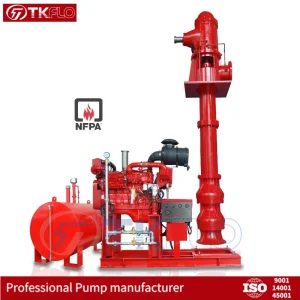
  • Vertical models for capacities up to 5,000 gpm
  • In-line models for capacities up to 1,500 gpm
  • End suction models for capacities up to 1,500 gpm
  • Drives: electric motor or diesel engine
  • Basic units and packaged systems
Fire Fighting Pump Solution

Precision balancing of all factors in the design of the horizontal split case fire pump provides mechanical dependability, efficient operation, and minimal maintenance. Simplicity of design ensures long unit life, reduced maintenance costs, and minimum power consumption. These pumps are specifically designed and tested for fire service applications worldwide, including office buildings, hospitals, airports, manufacturing facilities, warehouses, power stations, and the oil and gas industry.

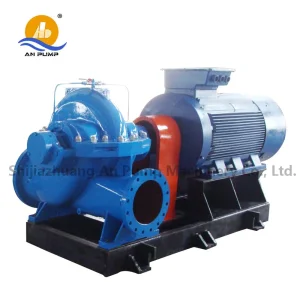
Fire Pump Electric Motor
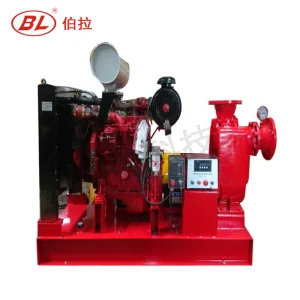
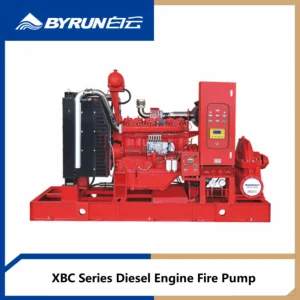
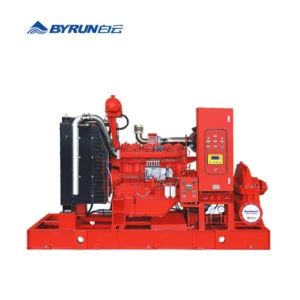
Fire Pump Diesel Engine
Fire Pump Control System
System Capabilities & Applications

Fire Pump installations (UL approved, following NFPA 20 and CCCF) deliver superior fire protection facilities. Systems are designed from a broad selection of pumps, drives, controls, base plates, and accessories. Options include horizontal, in-line, and end suction centrifugal fire pumps, as well as vertical turbine pumps.

Fire Pump Applications

State-of-the-Art Engineering: Systems arrive ready to install. Pump, driver, and controller are mounted on a common base with complete, interconnected wiring. Preconstruction eliminates costly, complex installation problems.

Engineered System
Technical Parameters
FeatureSpecification
Capacity300 to 2500 GPM (68 to 567 M3/HR)
Head90 to 650 FEET (26 to 198 meters)
PressureUp to 650 psi (45 kg/cm2)
Horse PowerUp to 800 hp (597 kw)
DriversHorizontal electric motors, diesel engines
Liquid TypeWater or sea water
MaterialCast iron, Stainless steel, Ni-Al Bronze, Duplex stainless steel
Section View Detail
Jockey Pump Systems
Jockey Pump

A jockey pump maintains pressure in a fire protection piping system. It prevents the main fire pump from starting unnecessarily due to small leaks or pressure drops, acting as a critical component of the fire pump's control system.

  • Outlet Diameter: 25-150 mm
  • Capacity: 18-360 m³/h
  • Pressure: 0.3-2.5 MPa
  • Seal: Bergmann mechanical seal
Manufacturing Excellence
Manufacturing facility 1
Manufacturing facility 2

Quality Guarantee & Services:
  • One year guarantee for the whole machine (except wear parts)
  • 24-hour technical support
  • Complete user manuals and installation guides
  • Full process training and guidance from expert technicians
  • ISO 9001:2015, ISO 14001, and ISO 45001 certified quality systems
Certifications
Frequently Asked Questions
What makes a fire pump different from other kinds of pumps?
Fire pumps meet stringent NFPA 20, UL, and FM requirements for reliability under extreme conditions. They must produce specific flow rates and maintain at least 65% of rated pressure at 150% flow, even at a 15-foot lift. Casings must withstand hydrostatic tests of three times the maximum operating pressure.
What is the typical lead time for a fire pump?
Typical lead times range from 5 to 8 weeks from the release of an order, depending on specific configuration and requirements.
How are engines and motors sized for fire pumps?
Motors and engines are sized according to NFPA 20 standards to operate at any point on the pump curve without exceeding the service factor. They are designed to handle flow even beyond 150% of rated capacity.
Do I need to worry about NPSH in fire pump applications?
Rarely. Fire pumps require a "flooded suction" where water arrives via gravity. This ensures 100% priming at all times, which is critical for fire emergency response.
Can I use a flow meter loop as a substitute for a test header?
A flow meter loop is practical for testing hydraulic performance but does not test the actual water supply integrity. For initial start-ups, flowing water through hoses and playpipes is highly recommended to expose any supply obstructions.
What is the easiest way of determining pump rotation?
For a horizontal split-case pump, facing the pump from the motor side: it is right-hand (clockwise) if suction is on the right and discharge is on the left.

Related Products